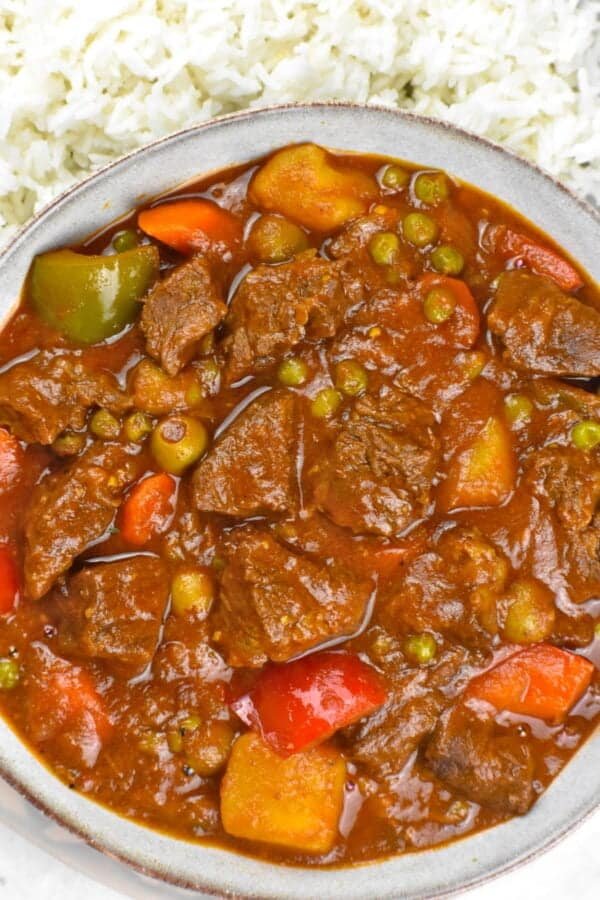
Beef Caldereta, or Kaldereta, is one of the most loved dishes in Filipino cuisine. Here’s a simple guide that mixes cooking tradition, technique, and modern style. It aims to provide deep insights and clear authority on this famous stew.
This recipe relates to Beef Mechdo, which I also shared in my Recipe Section. I wanted to point out the main similarities and differences between these dishes. People often confuse them.
What is Beef Caldereta?
Beef Caldereta is a tasty Filipino beef stew. It has a tomato-based sauce and liver paste. The stew includes potatoes, carrots, olives, and bell peppers. It’s slow-simmered for great flavour. It’s usually for celebrations, holidays, and family gatherings. It means comfort, indulgence, and cultural pride.
The dish comes from Spain but has evolved into a unique Filipino creation over the past 300 years. It features bold, savoury flavours and a smooth, rich sauce.
Why Beef Caldereta Remains a Filipino Favourite
- Deep umami flavour from liver spread and slow-cooked beef.
- Balanced richness from tomatoes, aromatics, and spices.
- Multi-faceted across regions and households.
Ideal for celebrations and make-ahead meals.
Caldereta improves with time, making it even more flavourful the next day.
Ingredients for Beef Caldereta with Cheese (Kalderetang Baka Recipe)
Protein
Beef beef neck, brisket, or short ribs (well-marbled cuts are preferred)
Aromatics
- Garlic
- Yellow or red onions
Base and Flavor Builders
- Tomato sauce
- Tomato paste
- Liver spread (or liver pâté)
- Beef stock
Vegetables
- Potatoes
- Carrots
- Red and green bell peppers
- Green olives or pickles (optional but traditional)
Seasonings
Bay leaves
- Black pepper
- Fish sauce or salt
- Optional chili for heat
Choosing the best beef cut for caldereta
Cuts with muscular tissue and textural variation. These break down well during slow cooking.
- Cut Texture Result
- Chuck, tender, juicy, classic choice
- Brisket, rich, beefy, deep flavour.
- Short ribs, luxurious, restaurant-quality.
Avoid lean cuts, as they lack the richness required for a proper caldereta.
Step-by-Step Beef Caldereta Cooking Method
1. Sear the Beef
Brown beef cubes in oil until they develop a rich toasted colour. This creates a basic flavour.
2. Sauté Aromatics
Cook garlic and onions in the same pot until they are fragrant and clear.
3. Build the sauce
Add tomato paste, tomato sauce, and liver spread. Stir the mixture until it is fully integrated and has a glossy appearance.
4. Simmer slowly.
Return the beef to the pot, add stock and bay leaves, then simmer gently for 1.5–2 hours until fork-tender.
5. Add Vegetables
Add potatoes and carrots halfway through. Then, include bell peppers and olives at the end.
6. Adjust and Rest
Season to taste. Allow the dish to rest before serving for greatest flavor development.
Key Techniques for Restaurant-Quality Caldereta
Apply liver spread in the proper manner.
Always dissolve liver spread into the sauce over low heat to avoid graininess.
Control Acidity
Balance tomato acidity with slow cooking and optional grated cheese or a pinch of sugar.
Low and slow are Best.
Rapid boiling toughens beef and separates the sauce.
Regional Variations of Beef Caldereta
Luzon-Style Caldereta
Tomato-forward with olives and bell peppers.
Visayan Caldereta
Often includes coconut milk for added richness.
Spicy Mindanao Version
Features chilies and bolder seasoning.
Each version uses local ingredients and tastes but keeps the dish's nature.
Serving Suggestions and Pairings
- Steamed white rice or garlic rice
- Crusty bread for sauce absorption
- Pickled papaya (atchara) for contrast
Caldereta pairs well with celebratory meals and communal dining.
Storage and Reheating Tips
- Refrigerate up to 4 days in an airtight container
- Freeze up to 2 months
- Reheat over low heat, adding a splash of stock.
Flavor deepens after resting overnight.
Nutritional Overview
- Beef Caldereta provides:
- High-quality protein
- Iron and zinc
- Energy-dense carbohydrates from vegetables.
Experts recommend moderation due to its richness.
Conclusion
Beef Caldereta is more than a stew. It's a tasty symbol of Filipino culture, patience, and skill in cooking. We use the right cuts and careful technique. We also pick classic ingredients. This way, we create a dish that is satisfying, festive, and unforgettable. This guide offers the best and most reliable way to make Beef Caldereta.