Have you ever had difficulties finding what you wanted in a messy cabinet full of kitchen tools? Yeah, same here. After years of cooking quick stir-fries and slow dinners, I learned one thing. Most kitchen tools are just noise. But a handful of them? Absolute workhorses.
Here’s the must-have list of kitchen tools. They aren’t ranked by an algorithm; they appear in almost every recipe, in every cuisine, every time you cook.
These are not unique kitchen Tools. These are the basic tools that professional cooks rely on and home cooks return to every day.
Contents
- 1 1. A Sharp Chef’s Knife — The Most Essential Kitchen Tool
- 2 A Grippe Cutting Board: Bigger Than You Think You Need
- 2.1 Bamboo Cutting Board for Kitchen, 3-Piece Wooden Cutting Board Se…
- 2.2 How to Choose the Right Cutting Board
- 2.3 3. A Cast Iron Skillet — the Best Value Piece of Cookware you’ll buy
- 2.4 Lodge 12 Inch Cast Iron Skillet – Pre-Seasoned Frying Pan with Te…
- 2.5 4. A Stainless Steel Pan — For Everything That Needs High Heat
- 2.6 E-far Frying Pan Set of 3, 8/10/12 Inch Tri-Ply Stainless Steel S…
- 2.7 5. A Saucepan (2–3 Quart) — the Most Reached For Pot in the Kitchen
- 2.8 OXO Hybrid 2.5QT Nonstick Saucepan with Glass Lid, PFAS-Free Cera…
- 2.9 6. A Dutch oven — The Long Game Pot Every Kitchen Deserves
- 2.10 Caraway Nonstick Ceramic Dutch Oven Pot with Lid (6.5 qt, 10.5″) …
- 2.11 7. A Set of Mixing Bowls
- 2.12 Thickened Heavy-Duty 26pcs Stainless Steel Bowl, Mixing Bowl Set …
- 3 8. Measuring Cups and Spoons
- 3.1 Simply Gourmet Measuring Cups & Spoons Set of 12, 18/08 Stainless…
- 3.2 9. A Spatula — Flat, Flexible, Irreplaceable
- 3.3 Coukre 3 Pack Silicone Spatula Set, High Heat Resistant, BPA-Free…
- 3.4 10. A Kitchen Scale — the Tool That Separates Good Bakers from Great Ones
- 3.5 KKZ 0.001oz/33lb Kitchen Scale, Dual Platform Food Scale Grams an…
- 4 Why This Is the Right List of Essential Kitchen Tools
- 5 Essential Kitchen Tools — Quick Reference List
1. A Sharp Chef’s Knife — The Most Essential Kitchen Tool
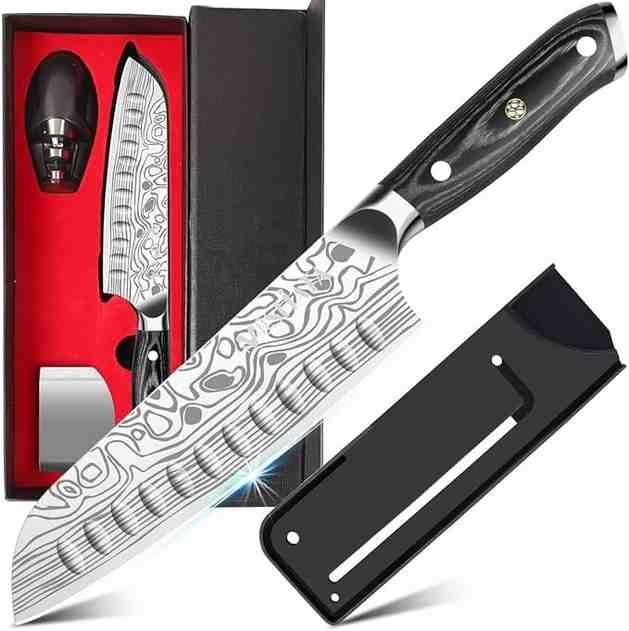
Why a Sharp Chef’s Knife Belongs at the Top of Every List
No single kitchen utensil matters more than a well-balanced, sharp chef’s knife. It does 80% of the prep work. It slices, dices, minces, breaks down proteins, and rough-chops vegetables. A dull knife is actually more dangerous than a sharp one. You have to press harder, which can cause slips.
Most professional cooks will tell you: buy one great chef’s knife before anything else. Other tools in the kitchen are optional by comparison.
What to look for in a chef’s knife:
- 8-inch blade — handy enough for most home cooks without being hard to manage
- Full tang construction (the blade steel runs the full length of the handle)
- German and Japanese steel are both excellent. They just have different balance points and edge profiles.

- Masterpiece Hand-Forged Damascus Chef Knife: Our exceptional hand forged chefs knife is a true masterpiece. Each damascu…
- Exquisite Blade Crafted from High-Carbon Damascus Steel: Our damascus steel chef knives is forged from high-carbon steel…
- Razor-Sharp Edge & Perfect Balance for Effortless Cutting:Get ready-to-use, razor-sharp performance from this profession…
(Note from the kitchen: A $70 knife, sharpened often on a whetstone, will perform better. This is true even compared to a $250 knife that’s never sharpened. Maintenance beats price every time.)
You’ll also need a paring knife. Choose one with a 3 to 4-inch blade. It’s great for peeling, trimming, and detail work that a chef’s knife can’t do well. And if you bake bread even occasionally, a bread knife with a serrated edge rounds out the core knife set.
A Grippe Cutting Board: Bigger Than You Think You Need

- 【Complete 3-Size Set for Every Kitchen Task】 This set includes a large (15″ x 10″), medium (12″ x 8″), and small (9″ x 6…
- 【Durable Sustainable Bamboo Construction】 Made from sustainably sourced bamboo, these cutting boards are crafted with a …
- 【Practical Dual-Sided Design with Added Convenience】 Each bamboo cutting board features built-in side handles for easy l…
How to Choose the Right Cutting Board
Here’s a mistake almost every beginner makes: buying a cutting board that’s too small. You often chase ingredients off the edge, and cleanup turns into a trying rush.
Go for at least 12 x 18 inches as your main board. A grippe cutting board — one with rubber feet or a non-slip base — is worth the few extra dollars. A sliding board on a wet counter is a genuine hazard.
- Use wood or bamboo for general prep and proteins.
- Plastic cutting boards for raw meat and fish are easy to clean and can go in the dishwasher.
- Keep both if possible; they serve different purposes
(Reader Tip: Place a damp kitchen towel under your board if it tends to slide — it works as well as built-in grips.)
3. A Cast Iron Skillet — the Best Value Piece of Cookware you’ll buy
What Makes a Cast Iron Skillet an Essential Kitchen Tool?
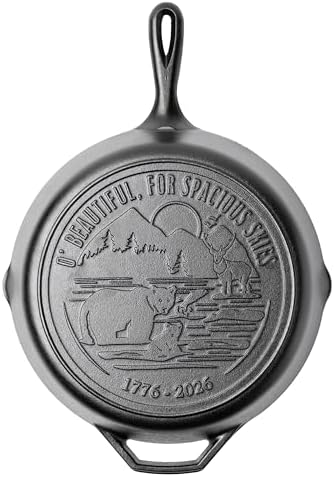
- Celebrate America’s 250th Anniversary with a special-edition cast iron skillet! Featuring lyrics and imagery from Americ…
- SEASONED COOKWARE: Seasoning is simply oil baked into the iron, giving it a natural, easy-release finish and helps preve…
- RUST? DON’T PANIC! IT’S NOT BROKEN: When your pan arrives you may notice a spot that looks like rust. It is simply oil t…
A cast-iron skillet is arguably the most versatile piece of cookware in existence. It moves easily from the stovetop to the oven. It holds heat more evenly than most stainless steel skillets. With proper seasoning, it develops a surface that becomes more non-stick over time. Sear a steak, bake cornbread, roast cherry tomatoes, and fry an egg— all in the same pan.
- Oven safe at high temperatures.
- Improves with age and regular use — a rare quality in kitchenware
- It lasts decades, generations
Wait, scratch that — don’t preheat an empty cast iron pan on the greatest heat. Bring it up on medium, as it holds temperature so well that you seldom need to use high heat.
Brands like Le Creuset sell enameled cast-iron skillets. They’re easy to care for and come in beautiful colors. However, a basic Lodge skillet does the same job for everyday cooking at a much lower price.
4. A Stainless Steel Pan — For Everything That Needs High Heat
Why Every Home Cook Needs a Stainless Steel Pan
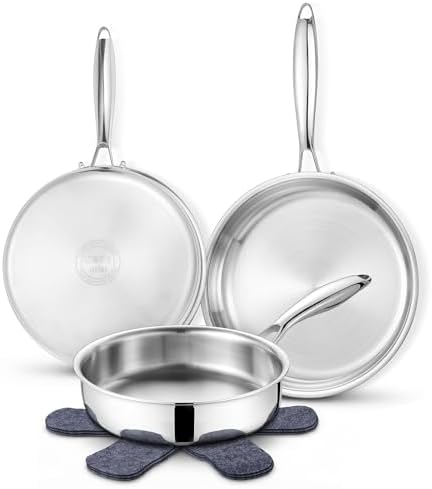
- 【Healthy & Non-Toxic Cooking Surface】Crafted from premium food-grade 18/10 stainless steel without any toxic coating, th…
- 【Tri-Ply Construction for Even Heating】Built with professional tri-ply construction featuring an aluminum core bonded be…
- 【Comfortable Stay-Cool Handle & Rivet-free Interior】Ergonomic stainless steel handle features a hollow-core structure an…
A stainless steel pan — typically a 10 or 12-inch skillet — does what a cast iron does, but it is lighter and heats faster. Stainless steel cookware won’t react with acidic foods like tomatoes or wine. This lets you deglaze, make pan sauces, and build flavor right in the pan without any concerns.
Stainless steel skillets are great for fond. This is the browned residue stuck to the pan after searing. It becomes the base for a good sauce. You actually want some sticking here; that’s where the flavor lives.
Good options exist at every price point. A solid stainless steel pan from All-Clad, Made In, or a good mid-range brand lasts for years with simple care.
5. A Saucepan (2–3 Quart) — the Most Reached For Pot in the Kitchen
When You Need a Reliable Everyday Saucepan

- OXO HYBRID NON-STICK STAINLESS STEEL: This versatile collection features diamond-infused PFAS-free nonstick, tri-ply sta…
- FUSION BOOST TECHNOLOGY: Combines diamond-infused PFAS-free nonstick, a raised stainless steel etched pattern, and a rei…
- 2.5QT HYBRID SAUCEPAN WITH LID: A go-to for sauces, soups, and grains, with just the right capacity for simmering, boili…
Boiling pasta water for a small batch? Check. Making a béchamel, heating soup, simmering grains, reducing a sauce, or making hot chocolate on a cold night? Check, check, check. A 2–3 quart saucepan is the pot that quietly handles more tasks than any other piece of cookware in the kitchen.
Stainless steel is the best choice. It heats up quickly, is easy to clean, and works well with both low and high heat.
6. A Dutch oven — The Long Game Pot Every Kitchen Deserves

- CARAWAY NOW LIVE ON AMAZON: Caraway has officially launched their best-selling and consciously crafted cookware on Amazo…
- 6.5 QUART DUTCH OVEN: Your new best friend for pastas, roasts, stews, bread baking, and more. This durable non-stick pot…
- NATURALLY NON-STICK: Our naturally slick non-stick pots and pans require less oil or butter for cooking and minimal scru…
Why a Dutch oven earns Its Cabinet Space
A Dutch oven is the pot for slow cooking, braising, soups, stews, no-knead bread, and one-pot pasta dishes. Its heavy lid holds in steam, the thick walls spread heat evenly, and it shifts easily from stovetop to oven.
Enameled cast-iron Dutch ovens are a good buy. Le Creuset is the best-known brand. Their performance is better than thinner options over time. A 5 to 7-quart size handles most home cooking volumes without issue.
7. A Set of Mixing Bowls
The Benefits of a Quality Mixing Bowl Set

- AIRTIGHT LIDS & 3 GRATER ATTACHMENTS:The airtight lids that come with this mixing bowl set make it easy to store ingredi…
- NON-SLIP SILICONE BOTTOMS: The rubber on the bottom of the mixing bowls is for gripping and staying put which prevents s…
- NESTING BOWLS & DISHWASHER SAFE: These kitchen serving bowls can be nested together and offer space-efficient storage in…
Most recipes must have a set of mixing bowls. These kitchen essentials do many things.
Stainless steel bowls are lightweight and almost unbreakable. They stack in an orderly manner for practical storage. A set of three sizes — small, medium, and large — addresses nearly every scenario.
- Small mixing bowl: Use for spice mixes, beaten eggs, and small amounts of sauce.
- Medium mixing bowl: batters, marinades, and vegetable tossing
- Large mixing bowl: big salads, bread dough, batch cooking prep
8. Measuring Cups and Spoons
Why Measuring Cups and Spoons Still Matter Even for Experienced Cooks

- DISHWASHER SAFE & DURABLE: Crafted from premium stainless steel, this professional measuring cups and spoons set is buil…
- ACCURATE MEASUREMENT EVERY TIME: Each measuring cup and spoon is engraved with both US standard and metric equivalents, …
- STACKABLE SPACE-SAVING DESIGN: Designed with efficiency in mind, this measuring spoons set and cups nest neatly together…
Baking is chemistry. Getting the right ratios early helps you cook savory dishes well. It makes your results more consistent. It’s key as you build your instincts. A good set of measuring cups and spoons is essential. They’re cheap and help avoid many common mistakes.
What to own:
- Dry measuring cups (1 cup, ½ cup, ⅓ cup, ¼ cup)
- A liquid measuring cup: 2-cup (500ml) capacity, heat-safe glass preferred
- A set of measuring spoons (1 tbsp., 1 tsp, ½ tsp, ¼ tsp)
Brands like OXO have great designs. Their angled interior markings let you read measurements from above. This means you don’t have to crouch, which is quite useful.
9. A Spatula — Flat, Flexible, Irreplaceable
How to Pick the Right Spatula for Everyday Cooking

- [3-Piece Spatula Set for Everyday Cooking]: Includes a Large Fish Spatula, Slotted Spatula, and Solid Spatula to handle …
- [Heat Resistant up to 500°F & Food-Grade Silicone] – Made from BPA-free, food-grade silicone that withstands temperature…
- [Comfortable Silicone Handle]: These silicone kitchen utensils are designed with a sturdy plastic core and thickened sil…
A spatula might be the most underrated utensil in the kitchen. Flip pancakes, turn fish fillets, fold batter, and scrape the last of a sauce from a bowl— it does all of it without fuss.
- Silicone spatula (safe up to 400°F): perfect for folding, scraping, and non-stick surfaces.
- Metal fish spatula: thin, flexible, and slotted. It’s great for flipping delicate proteins. You won’t break them easily.
- Keep both. They’re not interchangeable.
10. A Kitchen Scale — the Tool That Separates Good Bakers from Great Ones
Why a Kitchen Scale Belongs on This List of Essential Kitchen Tools
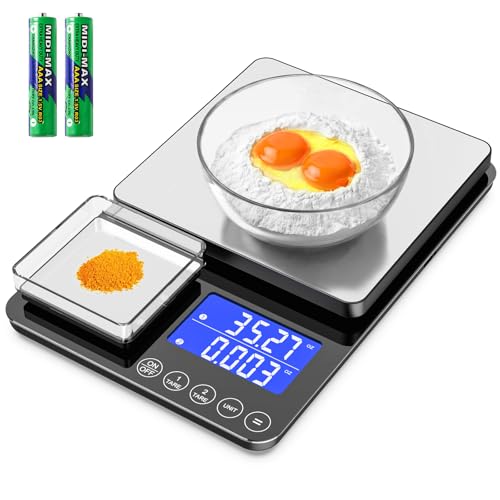
- 2-in-1 Scale for Multiple Uses: The KKZ food kitchen scale comes with two weighing platforms equipped with independent s…
- 7 Unites for Effortless Weighing: KKZ food scales for kitchen will weigh items in grams and ounces. It provides 7 units:…
- Simple to Use, User-friendly for All: Enhance your baking efficiency with the smart tare, accumulation and overload indi…
Volume measurements (cups, tablespoons) work fine for most cooking. For baking, like bread and pastry, you need exact ratios. A kitchen scale really helps. It gives you consistent results. Without it, you’re just guessing. A cup of flour by weight is always consistent. But a cup scooped by hand can vary a lot based on how tightly it’s packed.
A basic digital scale costs under $15. It measures weight in grams and ounces, resets to zero after each use, and barely takes up counter space. OXO offers a very user-friendly version. Once you start using one for baking, going back feels like working blind.
Why This Is the Right List of Essential Kitchen Tools
The difference between a genuine kitchen essential and a drawer-clogging gadget is universality. Each item listed works in various recipes, cuisines, and cooking methods. They aren’t just for one task. They solve recurring problems that show up every time you use a tool in the kitchen.
What makes these must-have kitchen tools?
- Each one overlaps across dozens of cooking techniques and recipes
- None requires significant learning curves or specialty knowledge
- These two kitchen tool categories—cutting and cookware—handle most daily cooking. They cover nearly everything you need.
- All are easily accessible, receive positive reviews, and are designed for durability.
Essential Kitchen Tools — Quick Reference List
- Sharp chef’s knife (8-inch) + paring knife + bread knife
- Grippe cutting board — large (12 x 18″ least) + plastic cutting boards for raw meat
- Cast iron skillet (10-or 12-inch)
- Stainless steel pan (10–12–inch)
- Stainless steel pan (2–3 liters)
- Dutch oven (4.7–6.6 liter, enameled cast iron)
- Mixing bowls (stainless steel, 3–5 sizes)
- Measuring cups and spoons (dry and liquid and a set of measuring spoons)
- Silicone and metal fish spatulas
- Kitchen scale (digital, grams/ounces)
Storage & Care: Making Your Kitchen Essentials Last
Good cookware and kitchen utensils last for decades with basic care. Here’s what actually matters:
- Chef’s knife, paring knife, and bread knife
- Hand-wash only.
- Dry immediately.
- Store the knives in a block or on a magnetic strip.
Frequently Asked Questions
Your Turn
Which of these essential kitchen tools do you already rely on daily — and which one has been sitting in the back of your cabinet collecting dust? Drop it in the comments below. Genuinely curious which tool surprises people the most when they finally start using it properly?